
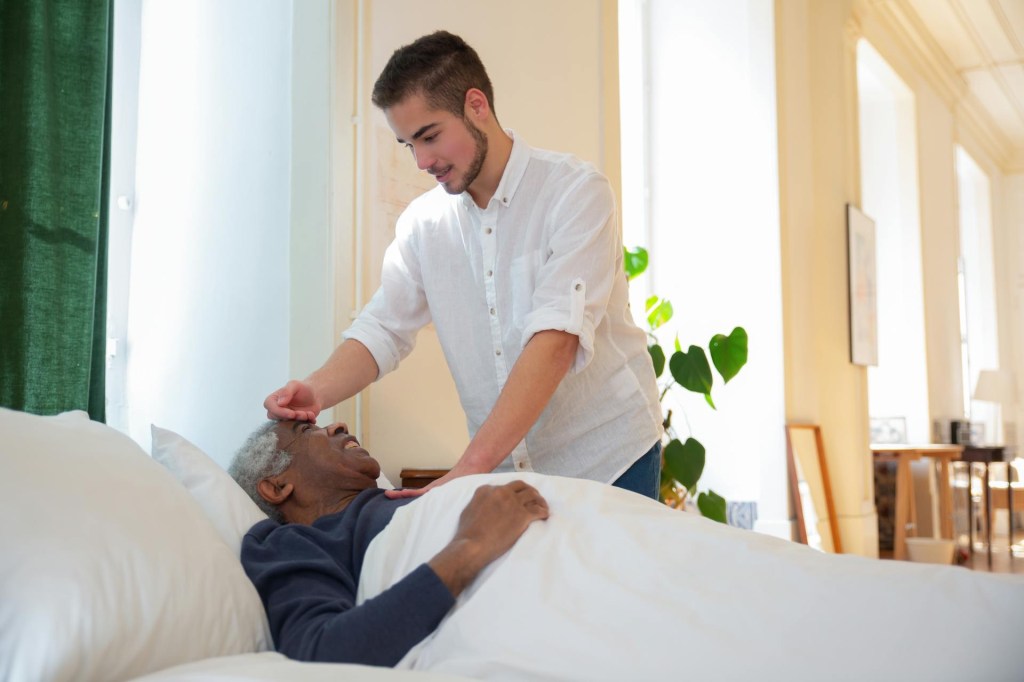
There are moments in this work that force us to pause and reflect—not on systems, policies, or funding—but on humanity.
Across California, there are individuals who are terminally ill and still incarcerated. Many are fathers, mothers, siblings—people whose lives are coming to an end within the confines of a system never designed to provide end-of-life care. Through compassionate release, some are granted the opportunity to spend their final days outside of prison walls.
But here’s the reality:
Too often, there is nowhere for them to go.
No safe place equipped to handle their medical needs.
No structured environment that bridges healthcare, housing, and dignity.
And in many cases, no opportunity to reunite with family in a meaningful way before they pass.
This is the gap we must address.
A Different Kind of Care Model
At Timelist Group, we are building a program in Lancaster that brings together Recuperative Care, Enhanced Care Management (ECM), and CalAIM Community Supports—not just as services, but as a continuum of care for those who need it most.
This program is designed to serve individuals at their most vulnerable moments, including those granted compassionate release from CDCR.
But more importantly, it is designed to restore something that often gets lost in institutional systems: dignity.
This means:
Providing a medically supportive environment for individuals who are seriously or terminally ill Ensuring access to coordinated care, including hospice when appropriate Creating a space where families can reconnect, sit together, and share final moments Supporting individuals not just as patients—but as people
Because at the end of life, what matters most is not where someone came from—but how they are cared for when it matters most.
Why This Work Matters
Compassionate release is not just a policy—it is a recognition of humanity.
It acknowledges that even within the justice system, there must be room for mercy, for family, and for closure.
Yet without the right community infrastructure, compassionate release falls short of its promise.
A release without placement is not compassion—it’s displacement.
We have an opportunity—and a responsibility—to build programs that ensure these individuals are not only released, but received with care, respect, and intention.
A Call to Build Together
This work cannot be done in isolation.
It requires partnership across:
Managed Care Plans Hospitals and health systems CDCR and parole divisions County agencies Community-based organizations
Together, we can create a model that integrates healthcare, housing, and reentry in a way that truly serves people at the end of life.
Final Thought
No one should spend their final hours alone in a system that was never designed for compassion.
Every person deserves the chance to be seen, to be cared for, and to be surrounded by those they love.
This is not just about reentry.
This is not just about healthcare.
This is about restoring dignity—when it matters most.
 YUSEF WILEY BLOCK
Leave a comment